(Link)
St Columba’s Church, Isle of Lewis, Scotland
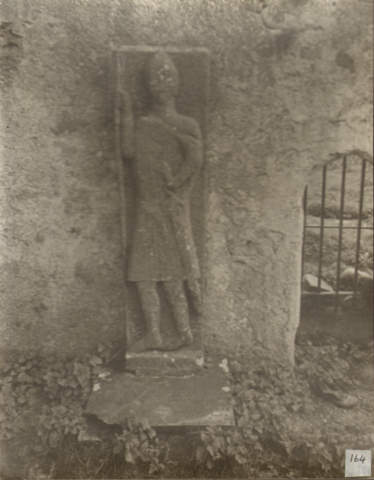
Grave slab for Roderick MacLeod VII (Died 1498)
This is the grave slab of Roderick MacLeod VII. I think the VII means he was the seventh MacLeod chieftain of Lewis rather than that he was the seventh Roderick. He would have had nominal allegiance to the Lord of the Isles in Islay until 1493 when John MacDonald forfeited his land and titles to James IV of Scotland. Roderick would have sworn allegiance to James IV in 1493 though Lewis remained effectively independent
Effigies at Iona of Scots Isles Warriors or Galloglaich
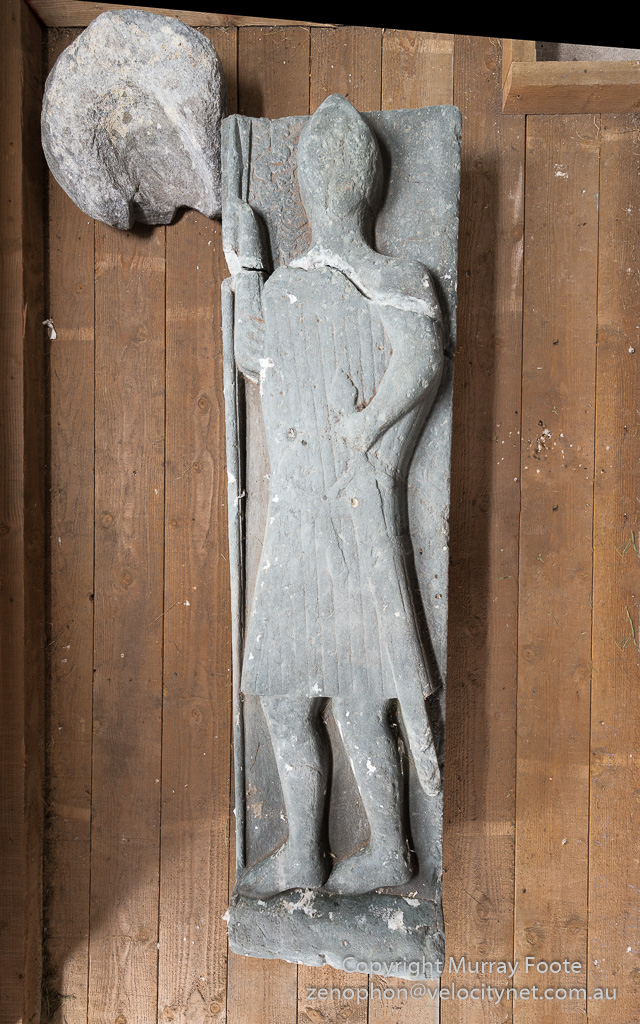
Effigy at Iona of Roderick, 7th Chief of the MacLeods of Lewis (d. c.1498)
Effigy carved in hornblende schist, one depicts a knight with pointed helmet, said to be Roderick, 7th Chief of the MacLeods of Lewis (d. c.1498)
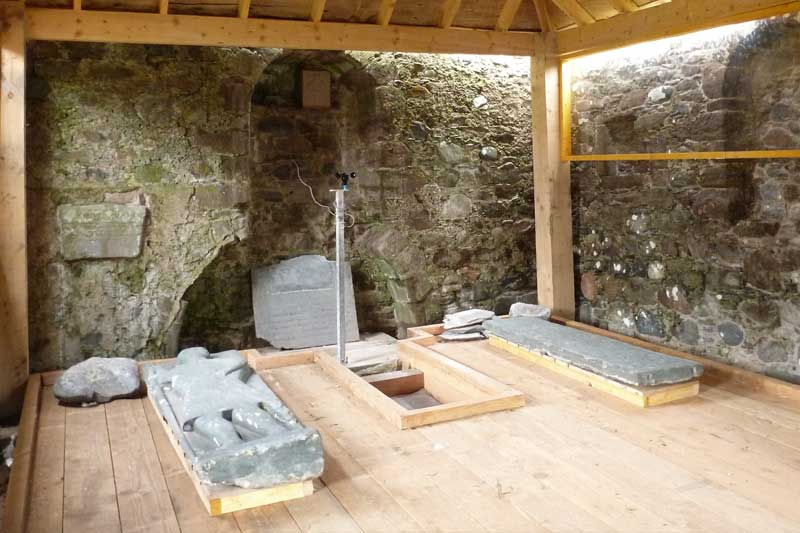
St Columba's Church, Aiginish, Lewis. Scotland
Eaglais Na H-Aoidhe, known in English as the Church of the Ui or Eye is in Aignish Cemetery in Point. Dating from the 14th century, this effigy above of a knight is thought to be Roderick, a chief of the Macleod’s.
(Link)
St Columba’s Church UI
(Eaglais na h-Aoidhe) is one of the most important archaeological sites on the Isle of Lewis. It was the main church during the medieval period and it is a burial place for the Macleod chiefs and the Mackenzies who controlled the island in later years. It contains two carved grave slabs commemorating Roderick Macleod VII (d.1498) and Margaret Mackinnon (d.1503).
(Link)
Aignish (Scottish Gaelic: Aiginis) is located northwest of Knock and east of Stornoway on the east coast of the Isle of Lewis, in the Outer Hebrides, Scotland. The township is at the island side of the isthmus connecting to the Eye peninsula. Aignish is within the parish of Stornoway, and is situated on the A866 between Stornoway and Portnaguran
The crofting village contains the historic Ui Church (Scottish Gaelic: Eaglais na h-Aoidhe), a large pre-Reformation Church. The present church buildings are believed to be medieval, built during two separate construction phases. They were constructed on the site believed to be the cell of St Catan, a contemporary of St Columba. The church was the burial ground of the MacLeods of Lewis.