Personal
Data |
|
|||||||||||||||||||||||||||||
 |
||||||||||||||||||||||||||||||
Comments |
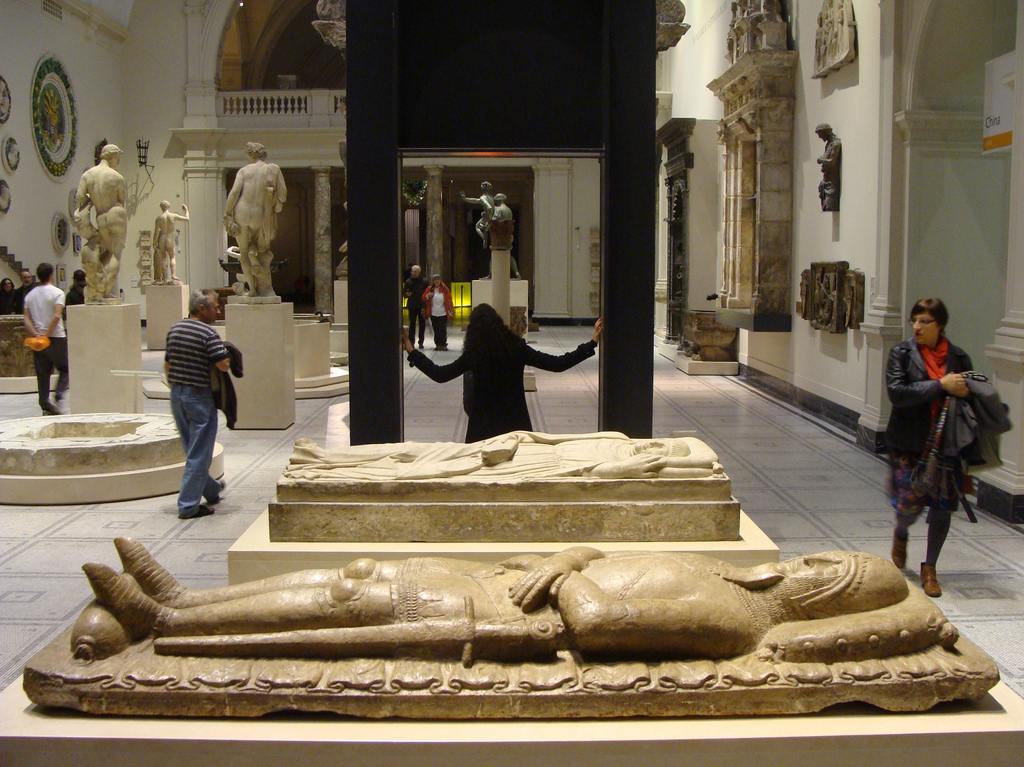
(Link) Victoria and Albert Museum, London Credit Line: Given by J. H. Fitzhenry, Esq. This piece comes from an English private collection, and was donated to the Museum. At that time, it was said to have come from a church on the Giudecca in Venice (in other words, the churches of the Maddalena, S. Cosma or S. Giacomo). It would have been removed at the time of the suppression of these churches in the last years of the eighteenth century. Nothing is known of the history of this piece after the suppression and before it was brought to England. Without knowing which church the effigy is from, it is not possible to say whom it represents. John Pope-Hennessy suggested that the work was similar to the tomb effigy of Jacopo Cavalli, also in a chapel of SS. Giovanni e Paolo. This tomb is signed by Paolo di Jacobello dalle Massegne, and dated 1384. Several aspects of this comparison are valid, in particular the decision to represent the knight as an older man, with a face sunken in death, and the detail of the bier cloth hanging in folds along the front edge. But in crucial respects the comparison is not a compelling one - the armour of the V&A knight is articulated differently, and in a manner more comparable to the Paduan effigies, and the other Venetian effigies. The Cavalli tomb is much more elaborate than the V&A effigy, and features such as the crouching animal beneath the feet of the Cavalli effigy are not duplicated on the V&A figure. The overall style of the Cavalli tomb is undoubtedly later than that of the V&A effigy, whose closest comparisons are the unattributed Venetian figures discussed above. A further problem with accepting Pope-Hennessy's conclusions is that it is difficult to reconcile the date of the Cavalli tomb, and the presumed life of the artist with the dating of the V&A effigy. It has been assumed that Paolo di Jacobello was the son of the Venetian sculptor Jacobello dalle Massegne. Jacobello is first referred to in 1383 and last cited in 1409. Paolo's first signed work is the Cavalli tomb in 1384, and he is last cited in 1414. Given that most commentators agree in placing the V&A's tomb effigy in the period 1370-75, it is hard to see how the son of Jacobello could have been active at this time, ten years before his first signed work. On these grounds, Wolters has argued against Pope-Hennessy's suggestion. But it would be difficult to accept anyway, given that the Cavalli tomb is by no means the closest stylistic and compositional comparison. The fact that the closest comparisons are both from Venetian churches lends strength to the assertion made on its acquisition that it had come from a church there. |
|||||||||||||||||||||||||||||
Images |
 |
|||||||||||||||||||||||||||||