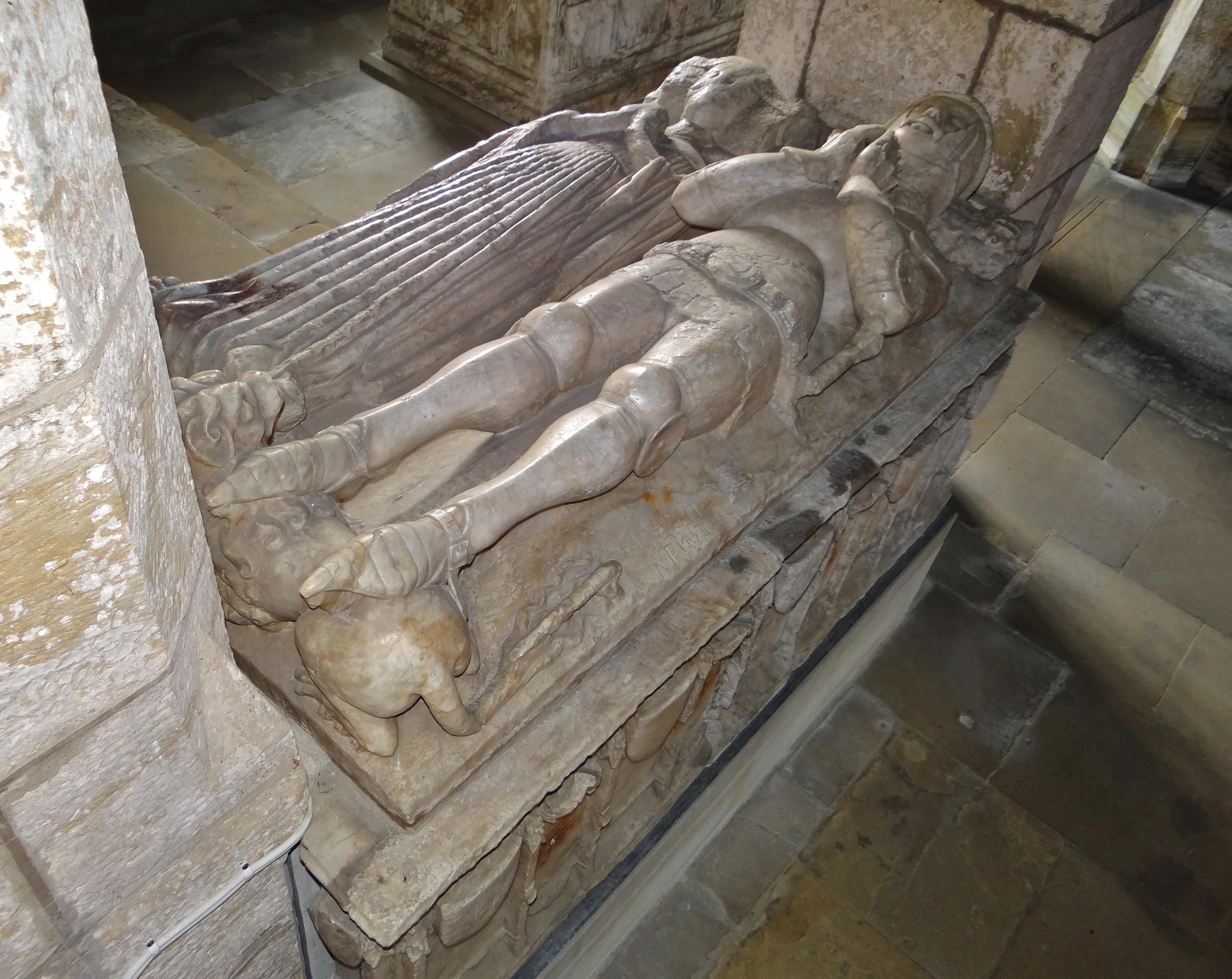
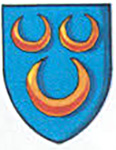
Sir William Ryther (d.1426) & Sybil (Aldburgh)(d.1440), Harewood, Yorkshire.
Harewood, Yorkshire West Riding
All Saints
Nation's most important collections of alabaster effigies: All Saints, set within the park of Harewood House is a 15th century church much restored by Sir George Gilbert Scott in 1862-63. Its rather severe interior houses the UK's most significant collection of alabaster effigies and tombs, dating from 1419 to 1510, commemorating the owners of Harewood and of a nearby estate, Gawthorpe. Six pairs of effigies, intricately carved provide a unique history of mediaeval armour and costume, and of the development of the art of alabaster carving for which England was famed throughout Europe. The Harewood House Trust is working in partnership with the Churches Conservation Trust to make the church an integral part of the Harewood Estate experience.
(Link)
Yorkshire, Harewood - battered wife?
Sir William Ryther 1426 of Ryther Castle and wife Sybil Aldburgh 1440
Sybil was the younger daughter of William de Aldburgh who jointly inherited Harewood and Gawthorpe with her sister Elizabeth (Link) in 1392 and rebuilt the church.
William Ryther was the son of Robert Ryther Lord of Ryther and Margaret Totheby and nephew & heir of Sir John de Toutheby..
Children
1. Sir William Ryther c1379 -1440 m Maud / Matilda daughter of Sir Thomas Umfraville of Harbottle
2. Sybill m Sir Robert Babthorpe
3. Isabella m John Thwaites d1469 (lawyer)
William was the grandson of Sir Robert Ryther and Maud 1322 at Ryther (Link)
Via their son William they were grandparents of William Ryther 1475 (Link)
Their marriage was not a happy one, an injunction being served on him in 1408 which appears to say that as well as being unfaithful, he may have attempted physical restraint and violence upon her. "On the 14th March 1408, there having happened a great difference between Sir William de Ryther and Sibilla his wife, he appeared before Henry Archbishop of York (then at the manor of Cawood) where he took corporal oath thenceforth to use her honestly and kindly observing certain articles (1) To do her no bodily harm or imprison her, but keep her in full freedom as a man of his degree ought to do with his wife, without doing or saying anything that may be reproof or villany to her person (2) To void Marion of Grindon out of his company and out of his children's company as long as the aforesaid Sibill lives, and to have nothing to do with the aforesaid Marion by way of sin (3) To find his wife and her maiden and her chamberer meat and drink reasonable for her estate. Witnessed by Richard Redmayne [Brother-in-law & co-occupier of Harewood Castle], Sir Henry Vavasour [manorial Lord], Henry Fitzhenry (Archbishop of York"
Sadly sybil's troubles were not over in death as her face has suffered water damage.
The Rythers and her sister Elizabeth's family the Redmans lived in the castle alternately or together for more than 200 years thus keeping the estates intact.
(Link)
ca. 1426 - 'Sir William Ryther (+ca. 1426) and Sybil Ald(e)burgh (+1440)', All Saints' Church, Harewood, Yorkshire, England
The (circular) besagews (here with twin fans on the couters) were very popular from the 1410s til the 1440s. From that date onwards they were often replaced by larger pauldrons.
Sir William Ryther and Sybil Aldeburgh's effigies are twin effigies of those of Sir Richard Redman and Elizabeth Aldeburgh (Link). They were probably commissioned together ca. 1426, around the time when both knights died.