Personal
Data |
|
|||||||||||||||||||||||||||||
Comments |
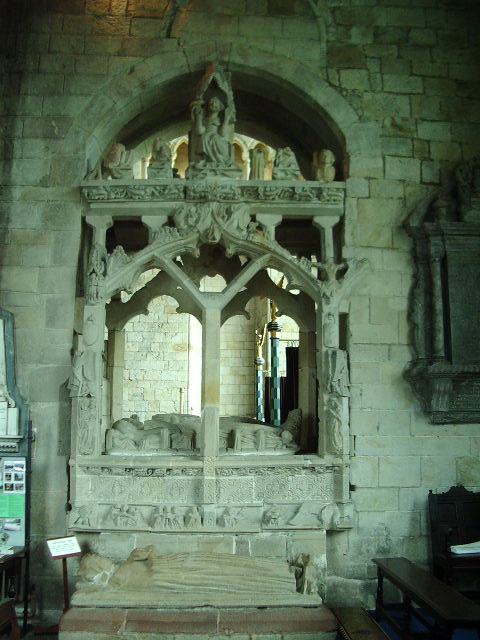
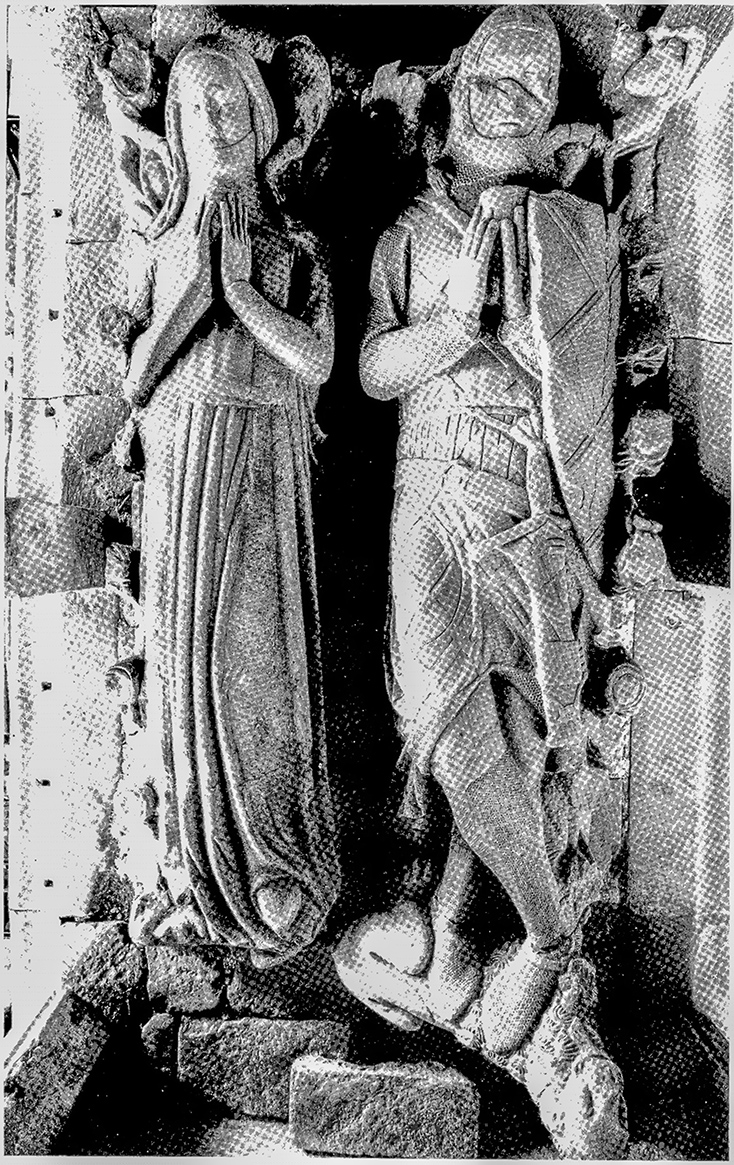
(Link) Cartmel Priory. This tour-de-force of a tomb is to Sir John Harrington, d. c. 1347, and his wife Joan (née Dacre) (Link) (Link) What is the age of the Harrington "tomb"? it is much to be regretted that we cannot give a very precise answer to this question, owing to the inadequacy of surviving documentary evidence. The sole date concerning it of which we can be quite certain is that of Lord John Harrington's death in 1347. But it was quite common for medieval grandees to prepare their tombs before they died, and it is at least feasible that the effigies were made at a different time from the chest and canopy around them — they are certainly made of stone from a different part of the quarry from which both certainly came. An attempt has been made to date the effigies from the stylistic evidence of the armour. Ward Perkins claims that the armour of Lord John shown on his effigy is "at least twenty years earlier in date than 1347" and argues that "the body armour and sword belt are of a type that was generally obsolete by c. 1325. The effigy must fall between the fifteen years 1310-25". But he also admits that the canopy and its ornament appears to belong to the second quarter of the 14th century. Crossley dates the monument to c. 1340 |
|||||||||||||||||||||||||||||
Images |
 |
 |
||||||||||||||||||||||||||||
