(Link)
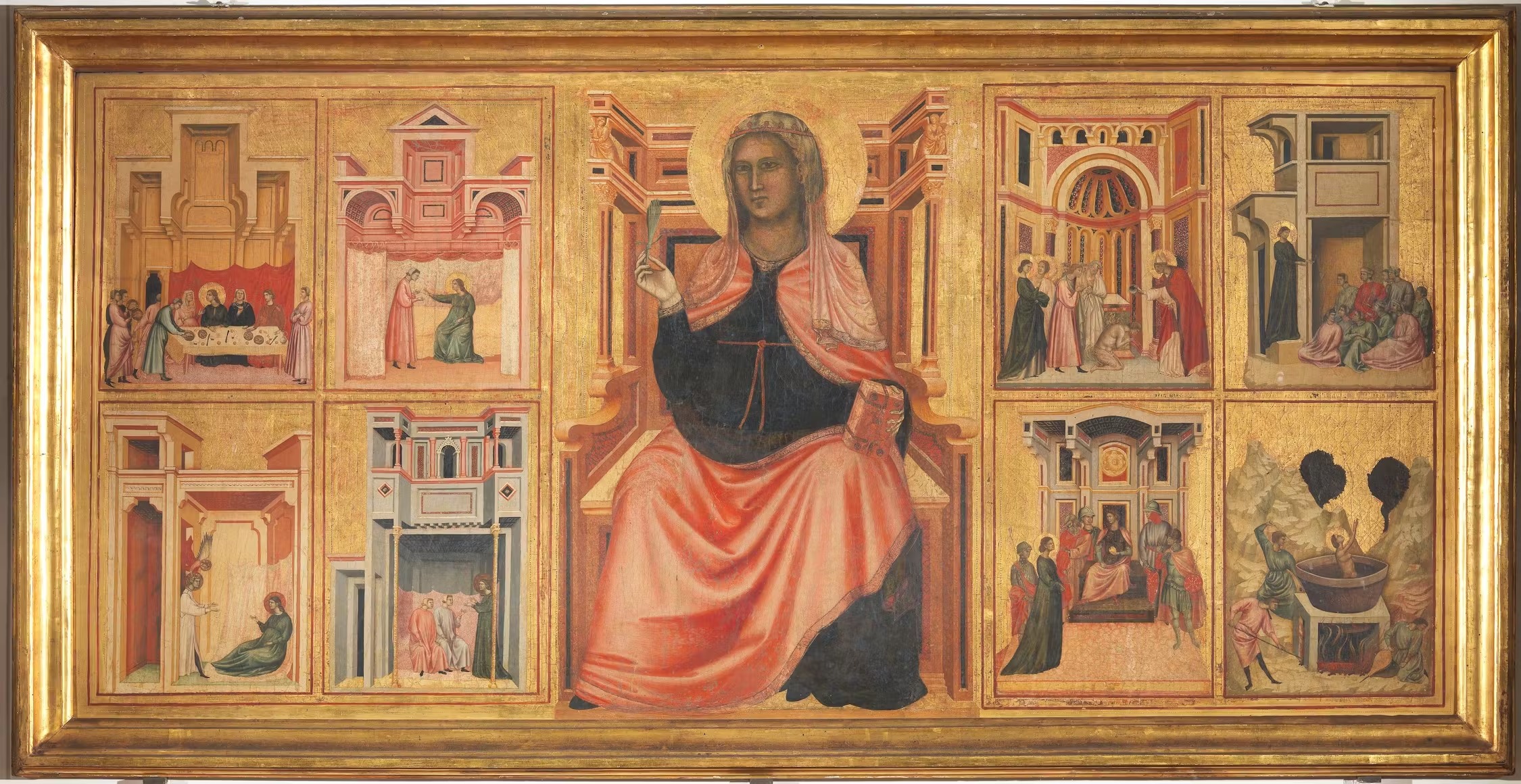
Saint Cecilia and stories from her life
Master of the St. Cecilia (Gaddo Gaddi?; Florence, late 13th - early 14th century)
Date - ca. 1305-1310
Museum - The Uffizi
Technique - Tempera on wood, gold background
Size - 85x181 cm
Inventory - 1890 no. 449
The altar reredos originates from the destroyed church of Santa Cecilia in Florence and came to the Uffizi in 1844. It may have been created during the renovation of the church, which was ruined by a fire in 1304. It is the work of an associate of Giotto whose formal name, Master of Saint Cecilia, derives from this painting now in the Uffizi. Gaddo Gaddi, a painter and mosaic artist who was the forefather of a well-known family of painters, may be the hidden identity of this master. Giotto's influence is evident in the orchestration of scenes within classical, box-like architecture, within which characters with solid corporeality and vivid gestures move.
(Link)
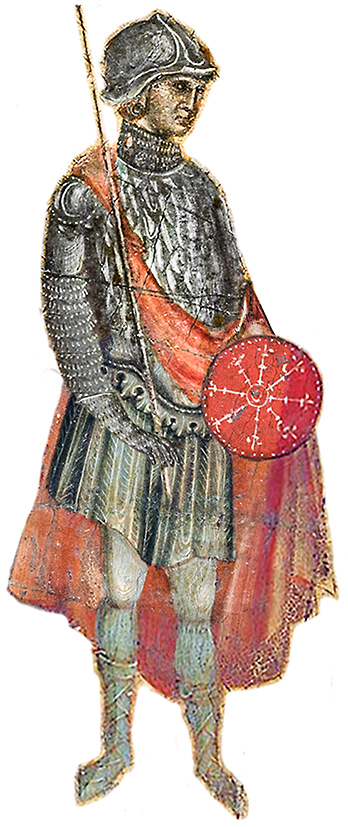
Saint Cecilia contrasting matters of faith with prefect,
detail from altarpiece depicting Legend of Saint Cecilia,
circa 1304,
by Master of Saint Cecilia (active early 14th century),
tempera on panel and gold leaf stamped, 85x181 cm
(Link)
The Master of St Cecilia is the notname given to an Italian painter active circa 1290 to 1320 in Florence and its environs
The artist has not been identified. The inscriptions and poses in some of his works show his familiarity with Ancient Roman mosaics and possibly point to the artist's link with or origin in Rome. A number of works are attributed to him including the altarpiece of St Cecilia Enthroned in the queen's parlor in the Galleria degli Uffizi, Florence. His notname 'Alpha of St Cecilia' derives from that painting.
.jpg)