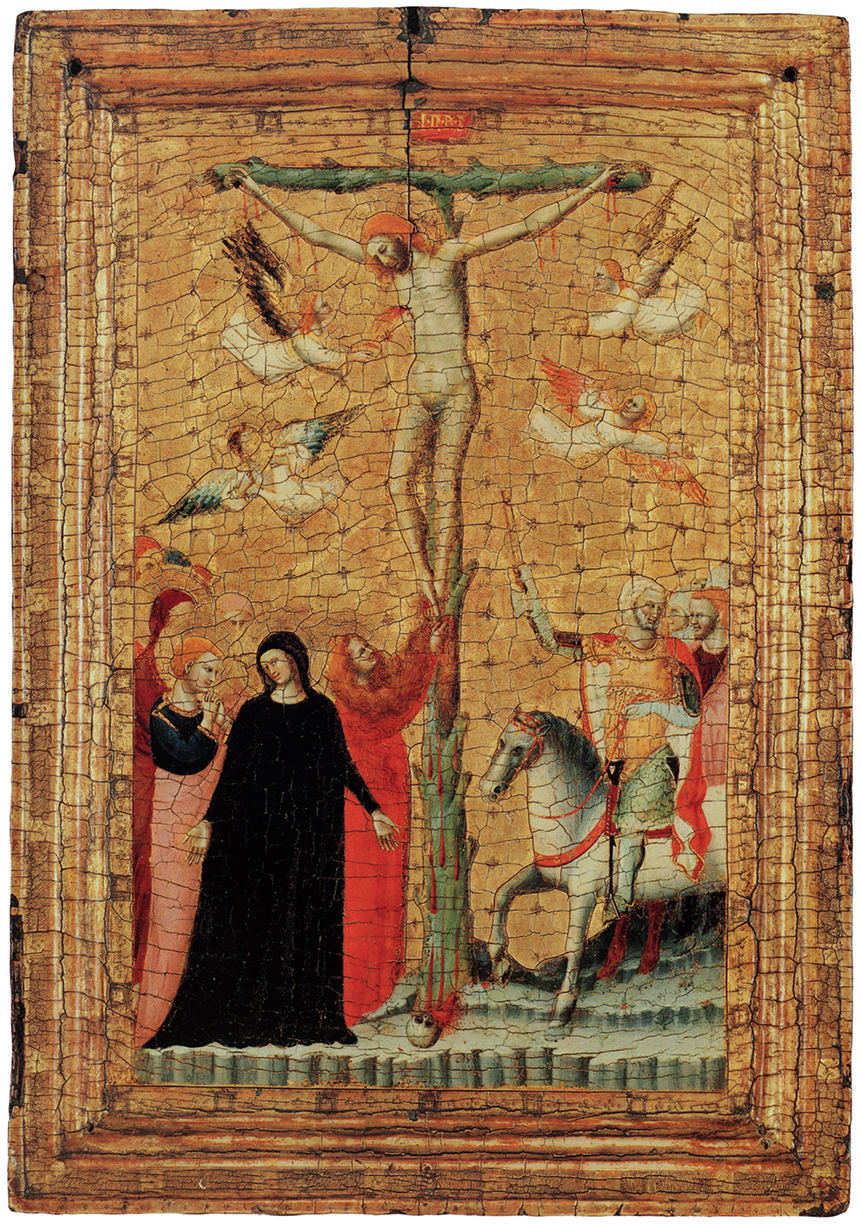
Francesco da Rimini, Kreuzigung, um 1320/30, Zurich, Kunsthaus
(Link)
(Link)
Maestro di Verucchio [Francesco da Rimini?], artist (*tätig in der ersten Hälfte des 14. Jahrhunderts)
Crocifissione
c. 1330/1340
(Link)
Con il nome Maestro di Verucchio viene indicato un anonimo pittore attivo nell'ultimo quarto del XIV secolo, autore di un gruppo di opere, incentrate sul Crocifisso della chiesa collegiata di Verucchio, che rivelano una originale personalità della scuola riminese, ma anche aperta ad influssi umbri. L'attuale critica, accogliendo l'ipotesi di Boskovits, è propensa a identificare il Maestro di Verucchio con Francesco da Rimini
(Link)
Francesco da Rimini
documented 1333, died 1348
... On the basis of Francesco da Rimini’s only signed works (a group of frescoes) ...
(Link)
Francesco da Rimini (active ca. 1320 - died before 1348)
(Link)
Francesco da Rimini, aussi connu comme le Maître de la bienheureuse Claire, est un peintre italien de l'école de Rimini mort en 1348. De style giottesque, il a été actif à Bologne dans la première moitié du XIVe siècle.
Les seules œuvres signées de Francesco da Rimini sont un ensemble de fresques (Pinacothèque nationale de Bologne)
(Link)
Francesco da Rimini was an important artist who completed small objects and large frescoes (wall paintings) across the Emilia-Romagna region in Northern Italy. His native city, Rimini, is a port on the Adriatic coast that had strong trading links with the Byzantine Empire in the Eastern Mediterranean. Byzantine icons had an important influence on Riminese paintings, particularly in the intense application of gold and multi-sectioned panels. Sadly, Rimini was bombed during World War Two, destroying most of the city’s heritage. This panel is one of around 100 Riminese panels that still exist from the 1300s.